


Welcome to your weekly macro roundup. This comprehensive edition covers the United States, Europe, and key emerging markets with in-depth analysis of the week's most significant economic developments and what they mean for markets ahead.
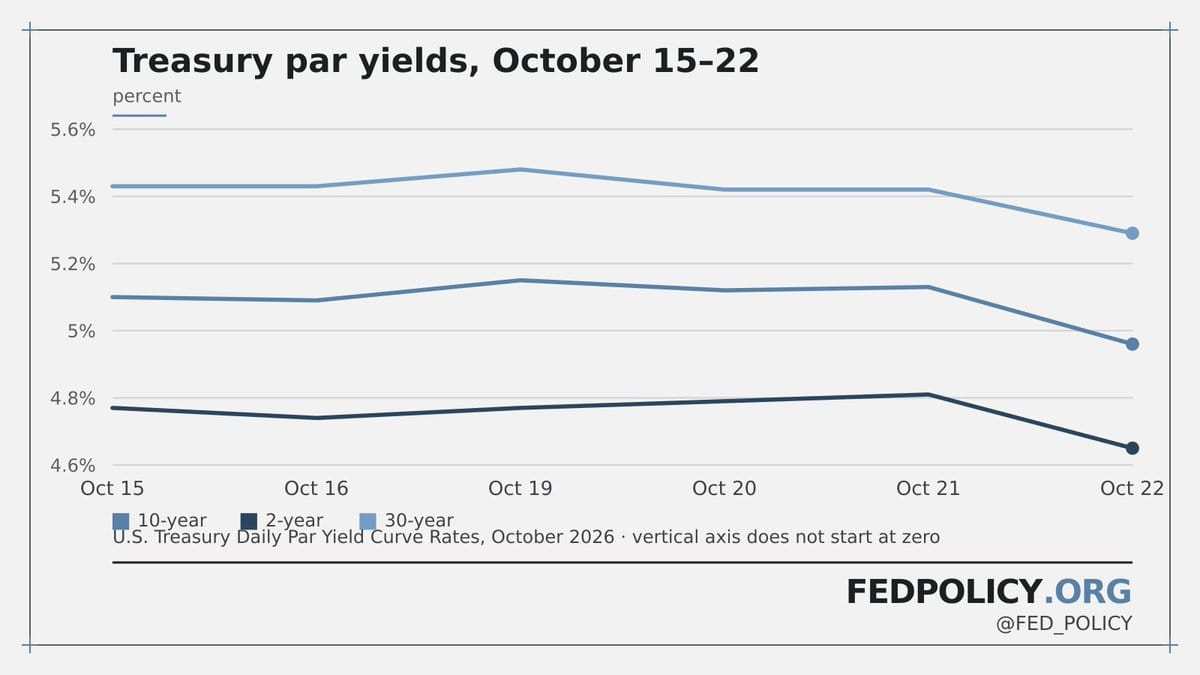
🇺🇸 Housing absorbs the Fed's tightening as factories run hot and layoffs stay rare
US pending home sales fell 7.3% to a record low and the 30-year mortgage rate reached 7.32%, while factory surveys ran hot and jobless claims dropped to 194,000. The Fed meets October 27 to 28, and economists still expect a December rate hike.

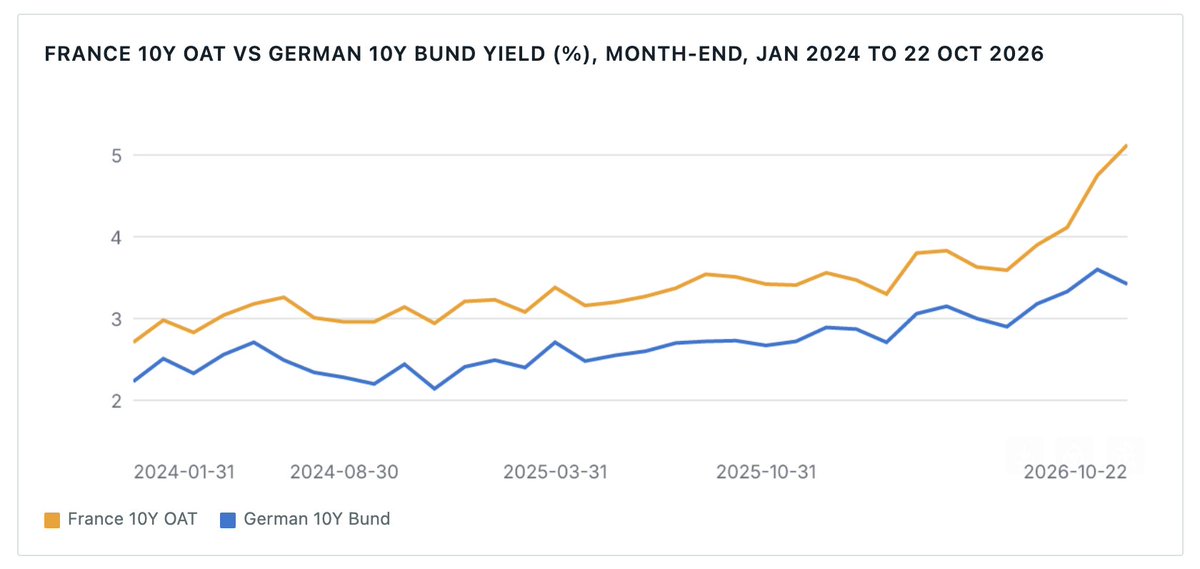
🇪🇺 France is doing the ECB's tightening as its spread over Bunds hits a 15-year high
France's 10-year yield hit 5.14% and its spread over German Bunds reached 177.7 basis points, the widest since 2011, as the composite PMI fell to 48.4. The squeeze lands days before the ECB's 29 October meeting and a Moody's verdict.
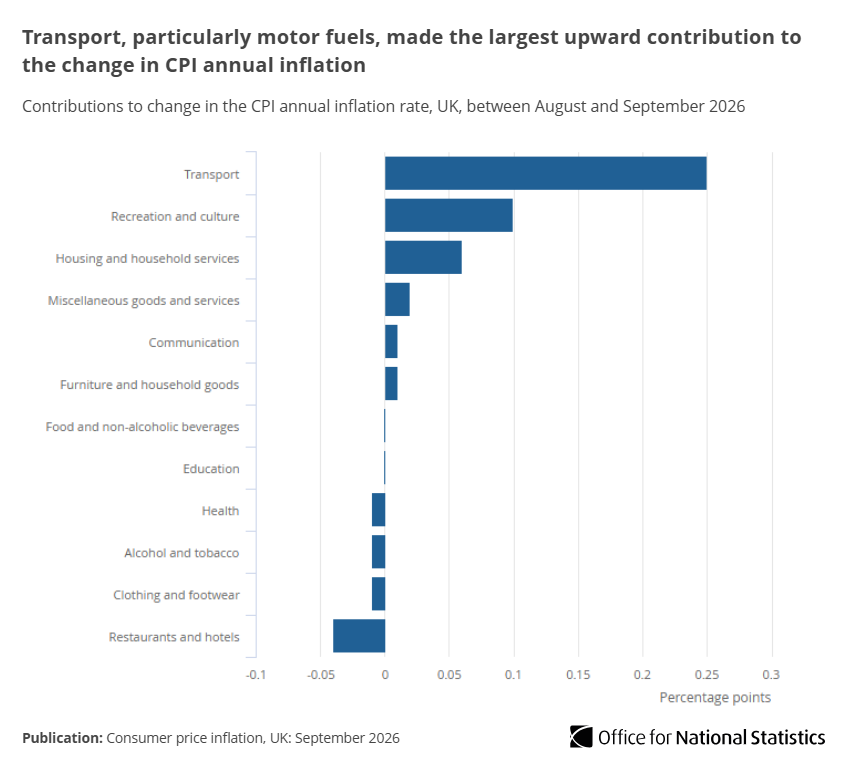
🇬🇧 Firms, households and the Treasury are absorbing the same energy shock, and the Budget lands in the middle of it
UK inflation hit 3.5% in September against a 3.4% forecast, factory-gate prices rose 4.6% and borrowing overshot by £1.9bn: one energy shock, three balance sheets. Investors expect a Bank of England hike to 4% on 5 November.
🌏 One oil shock has split emerging market central banks into five inflation regimes
Brent near $104 produced inflation of 1.6% in Hungary and 7.2% in the Philippines. The Philippine central bank hiked 50 basis points to 5.50%, Russia held at 14.00% and Turkey cut to 36%. Brazil's Sunday runoff is the next test.

🇨🇳 China's factories are pulling away from households while the state's own revenue slips
Budget revenue fell 0.1% in September and land-sale receipts dropped 23.2%, while third-quarter GDP grew 4.5%. Producer prices rose 5.0% against 0.9% consumer inflation, and the central bank is weighing an overnight rate as its main policy tool.

That wraps up this week's macro roundup. We'll be back with daily updates throughout the week and another comprehensive weekly edition next time. If you know someone who would appreciate this analysis, feel free to share. More signal, less noise, as ever. Cheers.
Discussion