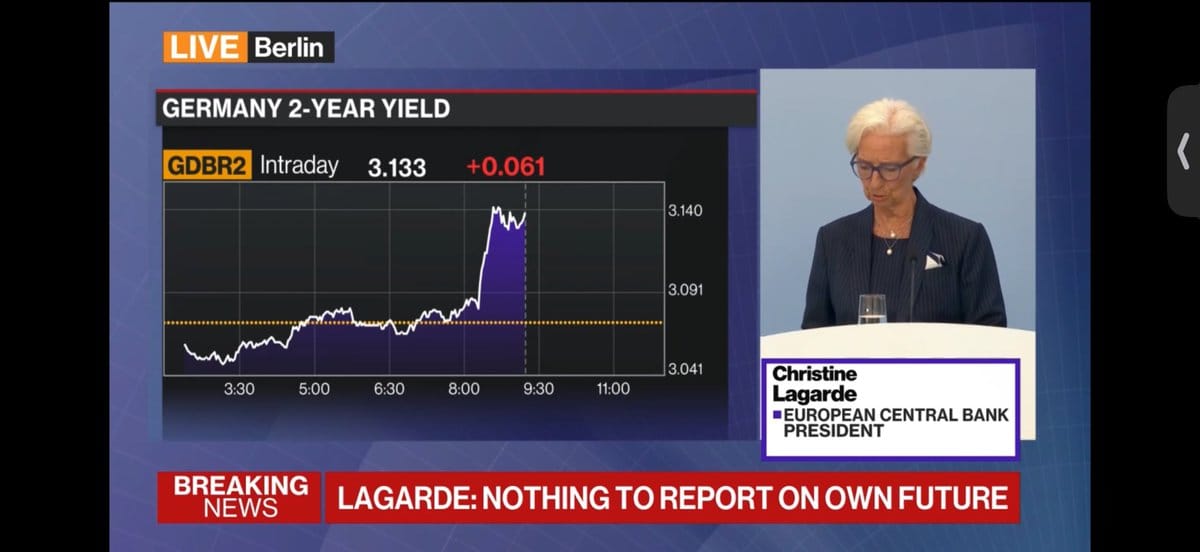
The European Central Bank raised its deposit rate to 2.50% on 10 September even as its own survey showed three-year inflation expectations climbing to 2.9%, and consumer prices split sharply across the currency bloc, from 2.6% in France to 4.6% in Spain.
ECB President Christine Lagarde called the 25bp September hike a “no-brainer,” while stressing that rates will not move in lockstep with energy prices. Source
The headline from Frankfurt this week was the rate itself: the European Central Bank (ECB) raised its deposit facility by 25 basis points to 2.50% on 10 September, the main refinancing rate to 2.65%, and the marginal lending facility to 2.90%. It was the Governing Council's second hike of 2026, and President Christine Lagarde framed it around a Middle East-driven energy shock keeping inflation "well above target for an extended period." That's the story every wire ran. The more uncomfortable story sits inside the ECB's own data, released in the days after the decision: the central bank's inflation anchor is drifting again, and the currency union is starting to split by price level rather than by bond spread.