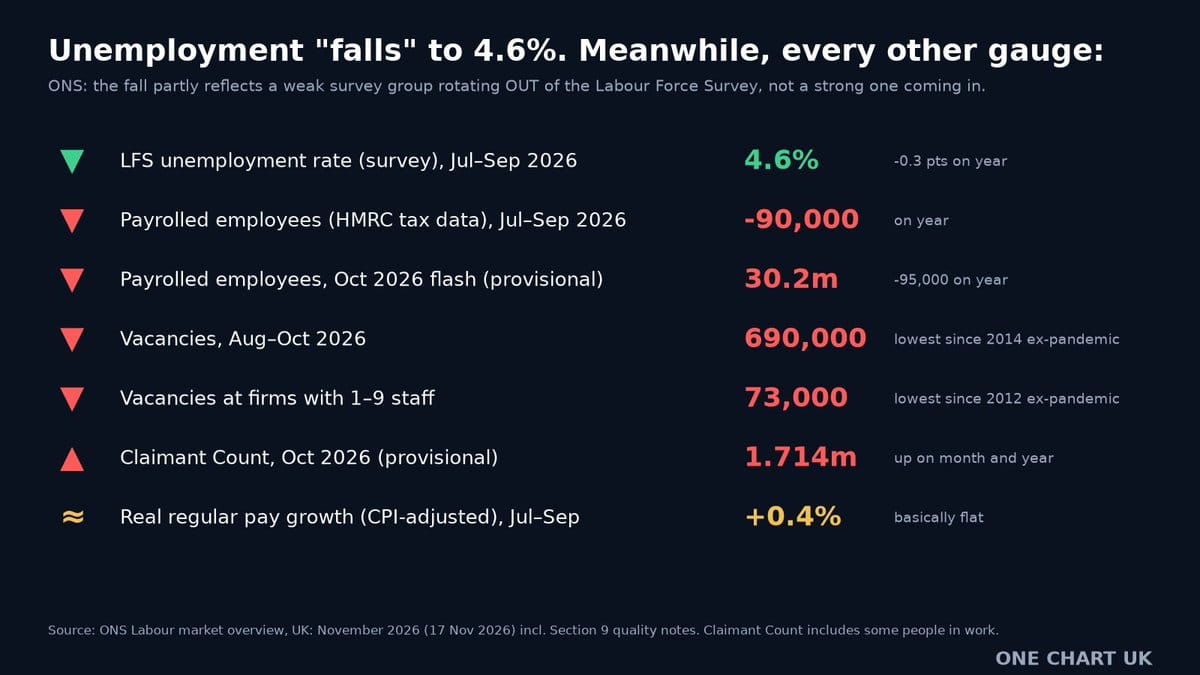
UK unemployment fell to 4.6% against a 4.7% forecast, but payrolled employees dropped 34,000 in October and vacancies fell to 690,000. Productivity rose 2.5% on the year, which eases wage pressure and leaves Wednesday's CPI print to decide a December hike.
One Chart UK’s composite of the November ONS release shows the 4.6% unemployment drop sitting against vacancies at their lowest since 2014 outside Covid and a yearly fall in payrolled jobs, with the ONS itself flagging sample rotation. Source
The headline in the Office for National Statistics (ONS) labour market release looks benign. Unemployment fell to 4.6% in July to September, against a 4.7% forecast (4.7% previous), the lowest since the three months to April. The employment rate rose to 75.4% and inactivity edged down to 20.8%. The ONS itself flags that part of the improvement reflects Labour Force Survey (LFS) sample rotation: the group leaving the panel had lower employment and higher unemployment than the group joining it. That fits a pattern. LFS response rates have been poor since 2023, and the Bank of England (BoE) has said it leans on payrolls, vacancies and its regional Agents' surveys instead.